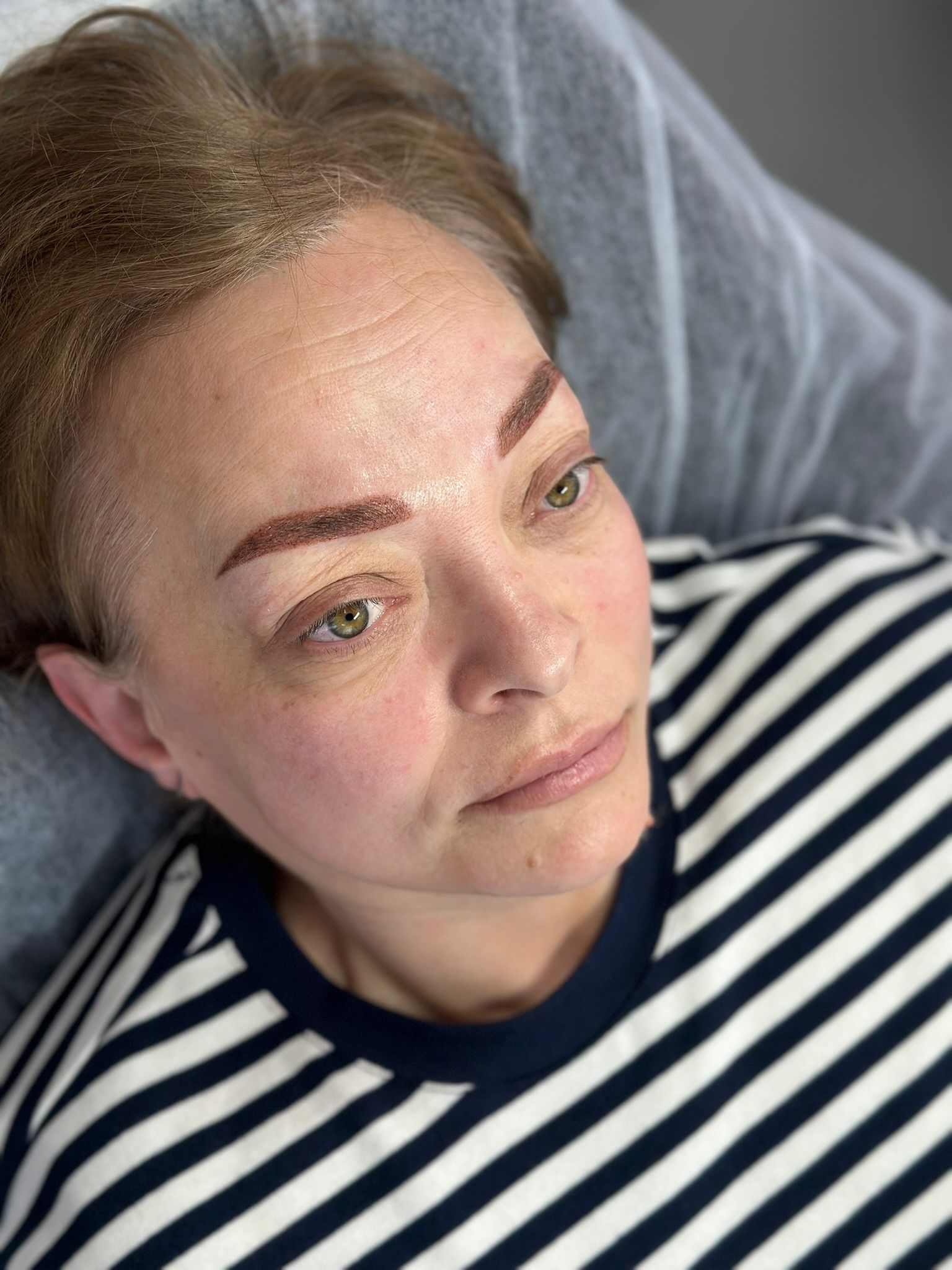
The Secret Language of Color: Why PMU Pigments Can Change Over Time
It's one of the most common fears whispered by potential permanent makeup clients: "What if my beautiful brown eyebrows turn blue or orange in a few years?" This is a valid concern, often born from seeing outdated, poorly executed cosmetic tattoos from decades past. The good news is that with modern pigments and a master artist's expertise, these undesirable outcomes are entirely preventable. The key to understanding—and avoiding—these changes lies in a fascinating science known as color theory.
This isn't just about choosing a pretty shade from a bottle. It's a deep, scientific understanding of how pigments interact with the unique canvas of your living skin. Let's pull back the curtain on the secret language of color to see why changes happen and how a true professional ensures your results heal and age beautifully.
The First Rule: Pigment in Skin is Not Paint on a Wall
The most crucial concept to grasp is that permanent makeup pigment is not like paint applied to a static, white wall. It is implanted into the living, translucent tissue of your skin. This means the final, healed color will always be a combination of two things:
- The color of the pigment itself.
- The color of your skin's natural undertones.
Think of your skin as a colored filter placed over the pigment. The final result you see is the pigment's color shining through that filter. This is why the same bottle of pigment can look drastically different on two different people.
The Secret Ingredient Under Your Skin: Undertones
This is the most important variable in the color theory equation. Every person's skin has a unique undertone, which is the subtle, underlying hue that doesn't change with a tan. These are generally categorized as:
- Cool Undertones: Skin has hints of pink, red, or blue.
- Warm Undertones: Skin has hints of yellow, peach, or gold.
- Neutral Undertones: A balanced mix of both cool and warm.
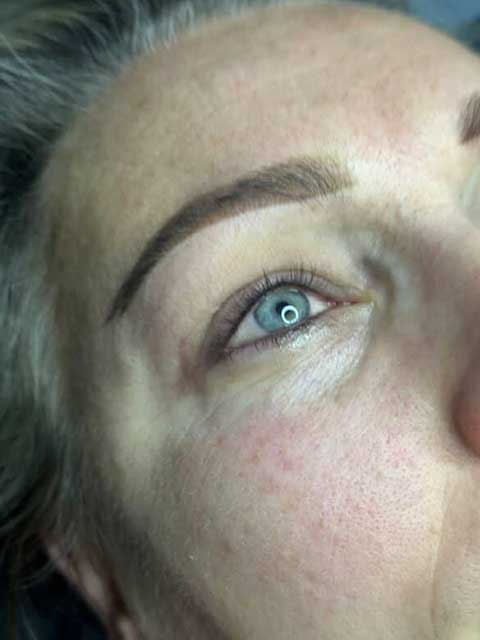
An inexperienced technician might choose a neutral brown pigment for a client with cool-toned skin. While it looks perfect initially, as it heals, the skin's cool (blueish) undertones will "mix" with the pigment, causing the final result to appear ashy, grey, or even blue. Conversely, a warm-toned pigment on very warm skin could heal to an overly reddish or orange hue.
The External Factors: Sun, Skincare, and Time
Over the years, even perfectly chosen pigment will gradually fade. However, how it fades is influenced by external factors.
- UV Exposure (The Sun): The sun's rays are powerful and will break down pigment molecules over time. Pigment colors are made of different sized molecules (for example, reds and yellows are often smaller than blacks and blues). UV light can break down the smaller, warmer-colored molecules faster, potentially leaving the larger, cooler-colored molecules behind. This is another reason why old tattoos can sometimes look blue—the warmer tones have faded away first.
- Skincare Ingredients: Chemical exfoliants like retinoids, glycolic acid (AHA), and salicylic acid (BHA) work by speeding up your skin's natural cell turnover process. If applied directly to your permanent makeup, they will cause the pigmented skin cells to shed more quickly, leading to premature fading.
The Master's Solution: How an Expert Guarantees Beautiful Aging
This is where the true artistry and science of a master artist shine. A professional doesn't fight color theory; they master it to ensure your results are beautiful for years to come.
- Advanced Assessment: The first step is a meticulous analysis of your skin's undertones. An expert can see the subtle hints of cool or warm tones that an untrained eye would miss.
- Custom Pigment Blending: A master artist almost never uses a pigment color straight from the bottle. They are like master painters, custom-blending colors on a palette. For a client with cool undertones, they will take a beautiful brown pigment and add a "modifier"—a few drops of a warm orange or red pigment. This modifier acts as a neutralizer, canceling out the skin's natural coolness and ensuring the brow heals to a perfect, rich brown.
- Future-Proofing the Color: A professional selects and blends pigments knowing how they will likely fade over time, ensuring they simply become a lighter, softer version of the original color, not an entirely different, unwanted hue.
The Art and Science of Color in Chicago
Understanding color theory is not just a skill; it is a fundamental responsibility of a permanent makeup artist. It is the invisible science that separates a beautiful, long-lasting result from a future correction appointment. It is the key to ensuring your investment in yourself is one you will love for years.
At PM Studio OK in Chicago, this deep understanding of color science is the core of our philosophy. Our master artists are rigorously trained in advanced color theory, and our custom-blending process is tailored to the unique canvas of each client. We don't just create beauty for today; we design it to age gracefully for tomorrow.
If you're in the Chicago, Illinois, area and are seeking artists who truly master the science behind the art, we invite you to book a consultation. Let's create a color that is perfectly, scientifically, and beautifully yours.